How Often Should You Pump a Septic Tank?
The short answer: most households should have their septic tank pumped every 3 to 5 years. The real answer depends on how many people live in the home, how big the tank is, and what goes down the drains. Here's how to figure out the right schedule for your house.
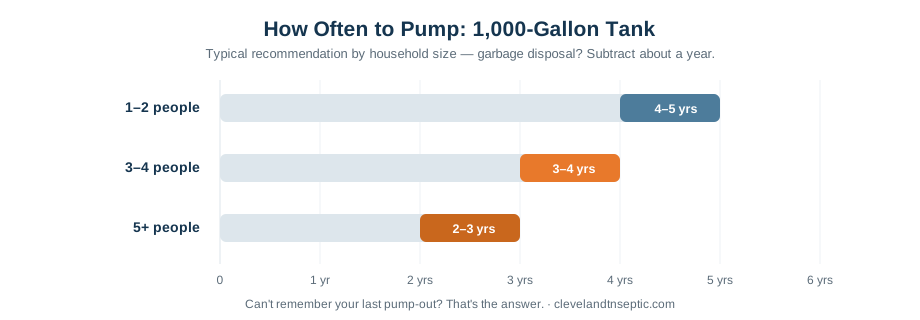
What Sets Your Pumping Schedule
- Household size. More people means more wastewater and more solids building up in the tank.
- Tank size. Many homes have a 1,000 gallon tank. Older or smaller homes may have less, which fills faster.
- Garbage disposal. Food scraps add solids quickly. Homes that use a disposal often need pumping sooner.
- Water use. Lots of laundry, long showers, or a leaky toilet push more water through the system and stir up solids.
Why Waiting Too Long Gets Expensive
Solids settle at the bottom of the tank and grease floats on top. When the tank gets too full, those solids can flow out into the drain field. Once the soil in the field clogs, pumping won't fix it, and you may be looking at drain field repair or replacement. A routine pump-out costs a small fraction of that. See our pumping cost guide for typical prices.
Signs You're Overdue
- Drains slow down throughout the house, not just one sink
- Gurgling sounds from drains or toilets
- Sewage smell near the tank or in the yard
- Soggy ground or extra-green grass over the drain field
- Water backing up into the lowest drains in the house
If you notice any of these, don't wait for your next scheduled date. Call (423) 250-9259.
Make It Easy on Yourself
Write down the date of every pump-out and keep the receipt with your house records. If your lid is buried, a riser brings it to ground level so future service is faster and cheaper. And if you just bought a home and nobody knows when the tank was last pumped, assume it's due.
Frequently Asked Questions
How often should a septic tank be pumped?
Most homes need pumping every 3 to 5 years. Larger households, smaller tanks, and garbage disposals can shorten that.
Can I go too long without pumping?
Yes. Overfilled tanks push solids into the drain field, which can clog it and lead to costly repairs or replacement.
Do septic additives replace pumping?
No. Additives don't remove solids from the tank. Regular pumping is the only way to do that.
More Septic Guides
- 7 Warning Signs Your Septic System Needs Attention
- Buying a Home With a Septic System in Tennessee
- Septic System Do's and Don'ts
- All resources